

By Political Affairs Desk
Published: September 20, 2026

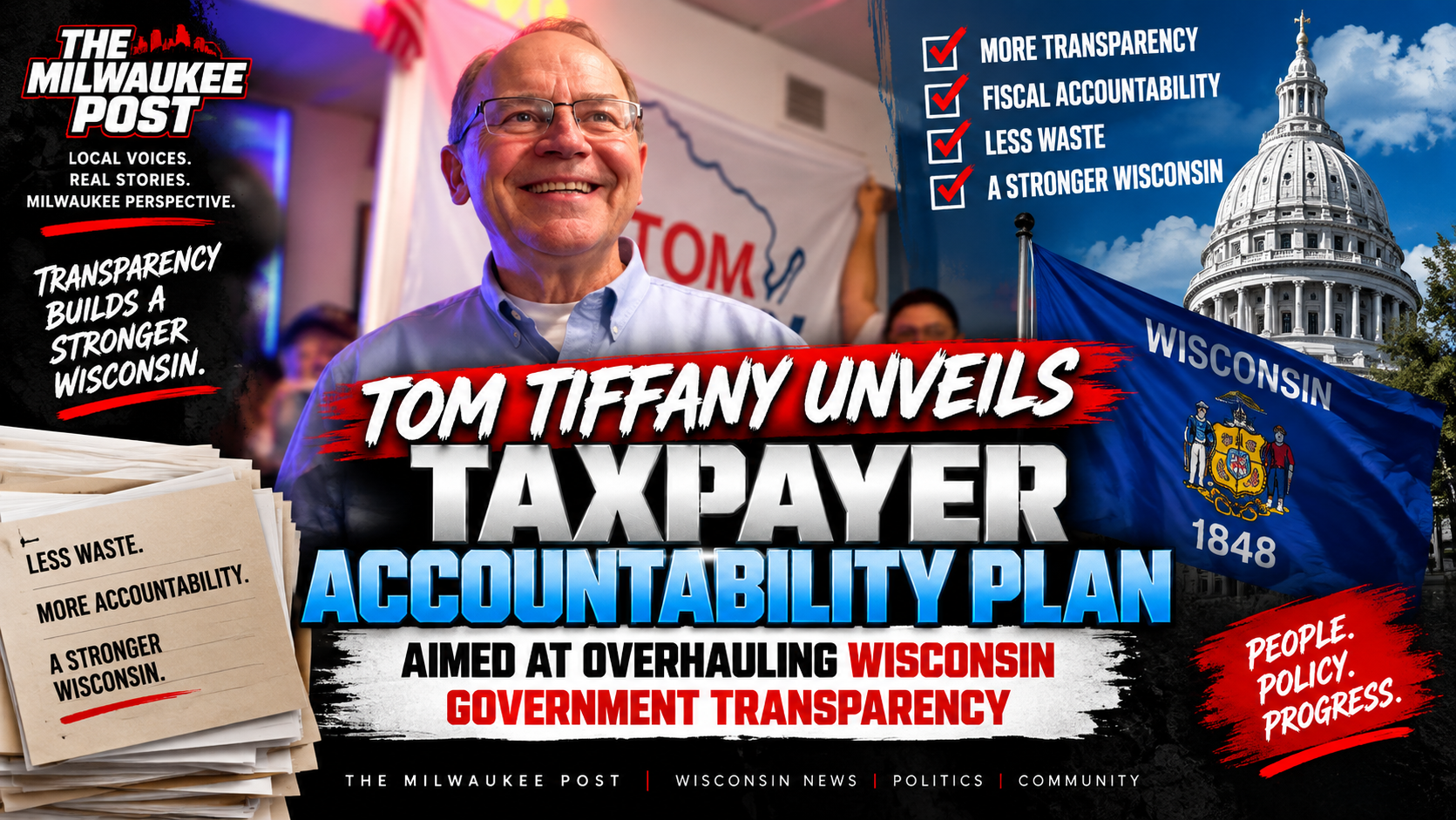
As the Wisconsin gubernatorial race heats up, Republican candidate Tom Tiffany has unveiled a new governance platform designed to reshape how the state tracks and reports spending. Announcing his “Taxpayer Accountability Plan” during a campaign swing through Eau Claire County, Tiffany promised to expand state oversight, overhaul public records access, and institute stricter auditing across state agencies.
The move marks a direct pitch to fiscal conservatives and undecided voters ahead of the upcoming election, framing government efficiency and open records as central pillars of his economic strategy.
Core Pillars of the Taxpayer Accountability Plan
Tiffany’s proposal focuses on three main policy areas designed to give Wisconsin residents greater line-item visibility into state spending:
- Expanding State Auditors:Tiffany pledged to hire additional state auditors to regularly examine individual agency budgets for waste, fraud, and duplication of services. He drew a sharp contrast with current leadership, pointing to Governor Tony Evers’ veto of four newly created auditor positions during the last budget cycle.
- Overhauling OpenBook Wisconsin:The plan promises a modern redesign of OpenBook Wisconsin—the state’s primary digital database for searching public expenditures, state employee salaries, and vendor contracts—to make navigation easier and data updates more frequent for everyday citizens.
- Public Agency Performance Dashboards:The platform proposes creating real-time public dashboards for state agencies. These interactive metrics would show taxpayers direct links between tax dollars allocated, services delivered, and measurable outcomes achieved.
Political Context & What It Means for the Campaign
Transparency initiatives have emerged as a primary battleground in the race for Wisconsin governor. Tiffany’s announcement came shortly after his opponent, Milwaukee County Executive David Crowley, introduced his own governance and anti-corruption package, highlighting a shared focus on government oversight across both parties.
“Wisconsin taxpayers work hard for every dollar they earn. Government should work just as hard to earn their trust,” Tiffany stated during his announcement in Altoona. “State government needs to prove it is using the money it already has responsibly.”
While supporters view the plan as a necessary step toward eliminating bureaucratic bloat and returning excess surplus to taxpayers, critics and policy analysts question how the proposed expansion of auditing personnel and public dashboard systems will be funded alongside proposed tax cuts.
What Comes Next?
With election day approaching, voters can expect state spending, tax relief, and public transparency to remain central debate topics. Whether these proposed government reform measures resonate with voters across Wisconsin’s varied demographic districts will be key in the weeks ahead.
What are your thoughts on state spending transparency? How accessible should public record portals be? Let us know in the comments below!