

By Opinion Editor
Published: September 20, 2026

If you’ve pulled into a gas station in southeastern Wisconsin lately, you’ve likely felt that familiar, sickening knot in your stomach.
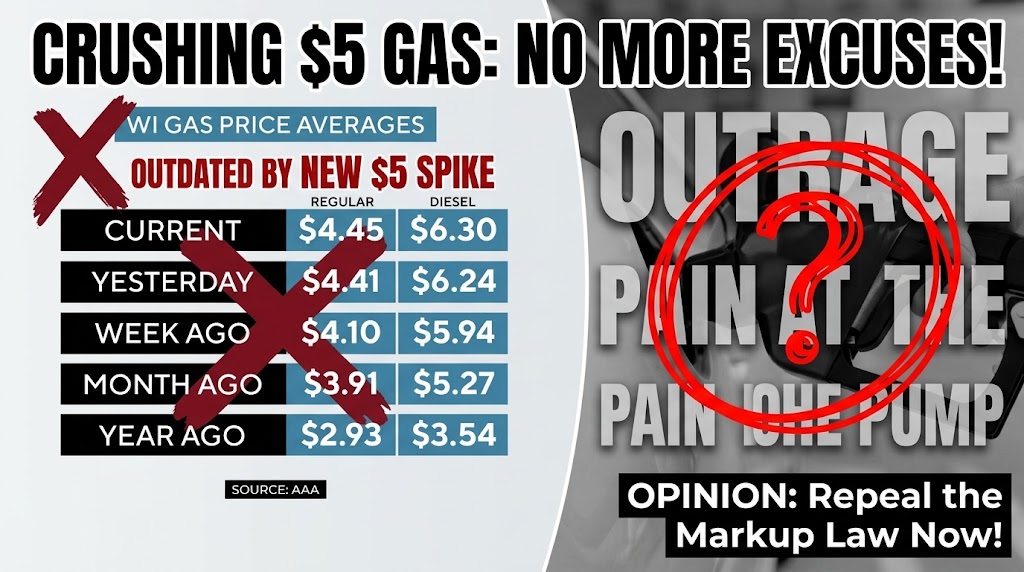
At a BP on Plankinton Avenue in downtown Milwaukee, regular unleaded touched a staggering $5.19 a gallon this weekend. Statewide, the average has surged past $4.45—a brutal 36-cent jump in just a single week.
For working-class families, local commuters, and small business owners, this isn’t just a minor statistical blip on the news. It is an immediate, punishing tax on everyday life. As local driver Lisandro Rodriguez pointedly told CBS 58, “There’s some people out here barely getting by. They’re kinda spending their last just to make sure they even get around… it’s just making it harder for people, so it’s not right.”
He’s completely right. It isn’t right. But while drivers are forced to cut back on groceries, cancel family trips, or alter their daily routines just to afford their commute, the response from policymakers remains infuriatingly passive.
The Anatomy of a Squeeze
To be fair, analysts can point to plenty of global supply shocks: ongoing geopolitical instability, drone strikes on international refineries, and localized issues like recent Midwest refinery power outages.
                   WISCONSIN GAS PRICE SURGE
┌─────────────────────────────────────────────────────────────────┐
│ Statewide Average:  $4.45 / gal (+36¢ in 7 days)                │
├─────────────────────────────────────────────────────────────────┤
│ Milwaukee Spot Price: $5.19 / gal (Downtown BP)                 │
└─────────────────────────────────────────────────────────────────┘
External shocks happen, but what makes Wisconsin uniquely vulnerable is a refusal by state policymakers to tackle self-inflicted wounds that artificially inflate prices at the pump.
Take Wisconsin’s outdated Unfair Sales Act (often called the minimum markup law). Dating back to the Depression era, this law essentially mandates a minimum profit margin on gas sales, legally preventing retailers from discounting fuel below a set threshold. While designed decades ago to protect small stations from mega-corporations, in times of economic crisis, it acts as an artificial price floor that punishes consumers when they need relief the most.
Repealing or suspending the minimum markup has been kicked around Madison corridors for years, yet lawmakers routinely let it stall in committee while drivers foot the bill.
Stop Telling Working Families to “Adapt”
When energy costs spike, the standard advice given to the public is to “change habits”—take fewer trips, carpool, or buy an electric vehicle.
Tell that to a shift worker in Milwaukee who needs to drive across town twice a day, or a tradesperson hauling tools in a pickup truck who doesn’t have the luxury of working from home. Telling people who are living paycheck to paycheck to “just adapt” ignores the reality of life in the Midwest, where personal vehicles are an economic necessity, not a luxury.
When gas creeps toward $5 a gallon, every dollar spent at the pump is a dollar taken away from local restaurants, main street retail, and family savings. High fuel prices act as a drag on the entire local economy.
What Needs to Happen Now
If state officials want to prove they understand the strain on working families, they need to stop waiting for global oil markets to magically settle down and take action on the levers they actually control:
- Repeal the Minimum Markup Law: Let free-market competition lower prices at the pump immediately instead of legally forcing stations to maintain profit margins.
- Temporary Gas Tax Relief: Pass a temporary, targeted reduction in state fuel taxes during severe price spikes, funded by state budget reserves, to offer direct relief at the register.
- Aggressive Price Gouging Oversight: Ensure regulatory bodies strictly monitor localized price spikes—like $5.19 gas—to verify consumers aren’t being exploited during market disruptions.
Drivers are tired of explanations; they need relief. It’s time for leaders in Madison to step up and stop letting Wisconsinites pay the price for inaction.
What are gas prices looking like in your neighborhood? How are you adjusting your budget to handle the spike? Drop your thoughts in the comments below!