

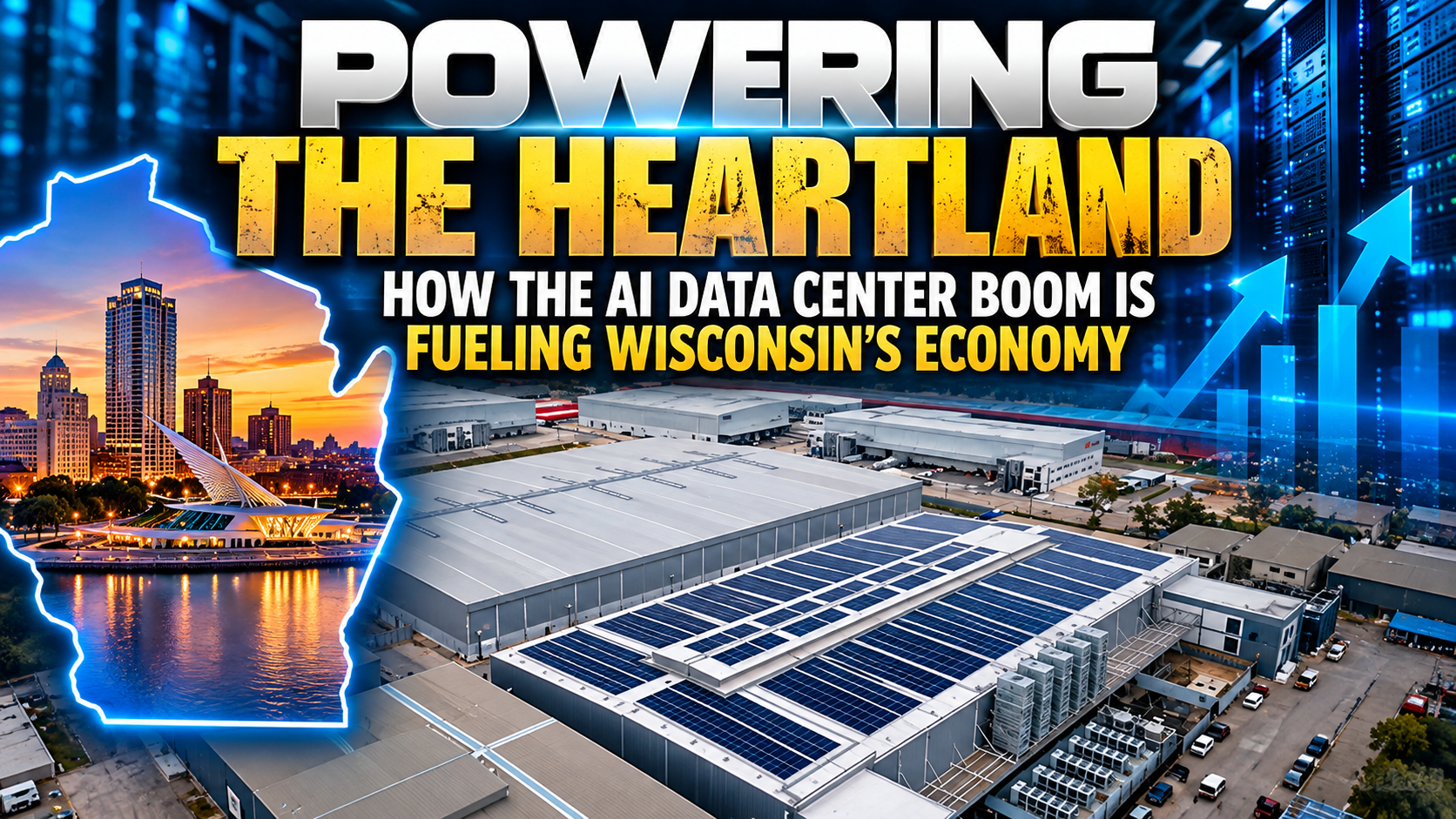
Across the Rust Belt, a quiet industrial transformation is unfolding. While massive tech hubs on the West Coast and along the East Coast traditionally grab the headlines for artificial intelligence innovation, America’s Heartland is quietly building the physical backbone that makes AI possible.
A series of recent economic impact reports—including new analyses highlighting data center developments across Wisconsin—paint a striking picture: the artificial intelligence surge isn’t just about software; it’s a massive manufacturing and infrastructure boom for local communities.

Here is a look at how artificial intelligence data centers are reshaping Wisconsin’s economic landscape, driving legacy manufacturing forward, and bringing fresh debate over the state’s industrial future.
1. Local Manufacturing Supply Chains Are Booming
You don’t need a mega-scale data center operating next door to feel the economic ripple effects of the AI wave. Wisconsin manufacturers—long known for heavy machinery, electrical components, and industrial equipment—have become vital suppliers for data centers across North America.
Local industrial powerhouses are seeing record-breaking demand:
- Electrical Infrastructure: Heavy machinery and motor manufacturers are reporting hundreds of millions of dollars in new purchase orders for specialized motors and industrial switchboards designed specifically to handle data center electricity loads.
- Backup Power Systems: Generator suppliers throughout the state have built up massive backlogs of orders to provide reliable, high-capacity backup generation for mission-critical facilities.
- Liquid Cooling Solutions: As AI chips run hotter than traditional servers, demand for advanced liquid cooling systems has skyrocketed. Wisconsin-based suppliers have expanded specialized facilities right in the state to meet this demand.
Together, state manufacturers have already secured well over $1 billion in data center supply chain orders, proving that the physical hardware needed for AI relies heavily on Midwestern craftsmanship.
2. Infrastructure Jobs and Local Investment
When a hyperscale data center sets down roots—such as Microsoft’s multi-billion-dollar investments in Racine County—the economic footprint reaches far beyond the building’s footprint.
The local impacts flow through several key areas:
- High-Skilled Construction: Building complex data centers requires thousands of skilled trade workers, electrician specialists, pipefitters, and engineers during construction phases.
- Permanent Tech & Operations Workforce: While direct facility staff counts are smaller than traditional assembly lines, they offer high-paying, specialized roles in IT management, electrical maintenance, and physical security.
- Community & Educational Partnerships: Major tech developers are investing directly in STEAM education programs, local nonprofits, and vocational workforce initiatives to train the next generation of tech talent locally.
3. The Big Debate: Power, Water, and Rates
While economic leaders welcome the industrial growth, the rapid scale of data center expansion has sparked significant debate across local communities.
       ECONOMIC DRIVERS                       COMMUNITY CONCERNS
┌───────────────────────────────┐     ┌───────────────────────────────┐
│ • Billions in hardware orders │     │ • Massive electricity demand  │
│ • Trade & construction jobs   │  vs │ • Local water usage concerns  │
│ • Local tax base expansion    │     │ • Energy grid capacity & rates│
└───────────────────────────────┘     └───────────────────────────────┘
The key issues front and center in state discussions include:
- Energy Demand: Hyperscale facilities require immense electricity, prompting questions about how utility providers will balance new industrial capacity alongside clean energy goals without raising residential electric rates.
- Water Usage: Cooling systems require substantial water resources, making environmental stewardship and closed-loop liquid cooling technologies a top priority for local residents around Lake Michigan and regional watersheds.
- Transparency: Local leaders and advocacy groups are calling for clear frameworks to ensure that energy infrastructure expansion is funded responsibly and transparently by incoming developers.
Looking Ahead: A New Industrial Era
Wisconsin finds itself at a unique crossroads. The state’s deep manufacturing roots position it perfectly to build the hardware powering the global AI revolution. At the same time, balancing energy demands with community interests will determine how sustainable this growth is over the next decade.
One thing is clear: the journey to the digital future runs directly through the industrial Midwest.