


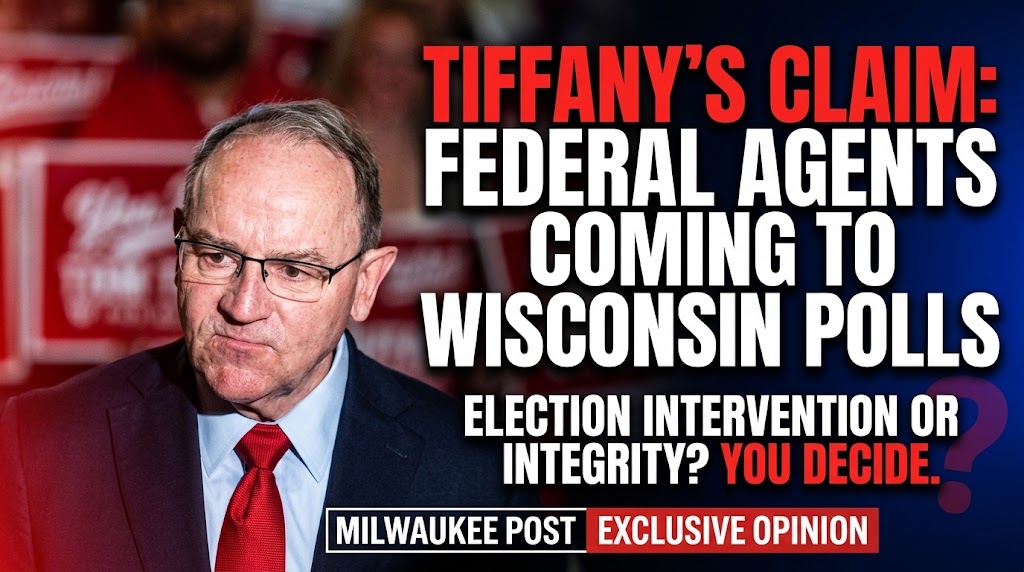
At a campaign gathering in Dodge County, U.S. Representative Tom Tiffany—the Republican nominee for Governor of Wisconsin—announced to supporters that federal authorities will be present in the state during upcoming elections to oversee process integrity.
The announcement quickly sparked intense debate across the political spectrum over the constitutional roles of federal oversight versus state authority in running elections.
Divergent Perspectives on Federal Election Monitoring
- Supporters’ Perspective: Proponents of federal involvement argue that sending federal monitors or personnel can deter potential irregularities, reinforce public trust, and ensure compliance with federal voting rights statutes. From this viewpoint, oversight measures serve as a safeguard for fair administrative procedures across voting districts.
- Critics’ Perspective: Opponents contend that federal presence at polling locations can cause unnecessary concern or confusion among voters. Under Article I, Section 4 of the U.S. Constitution (the Elections Clause), primary authority over the time, place, and manner of holding elections rests with state legislatures, leading critics to view calls for heightened federal involvement as an unnecessary intrusion into local administration.
The Constitutional and Legal Landscape
Under federal law, the U.S. Department of Justice periodically assigns civil rights attorneys and federal observers to monitor election procedures across various states during federal election cycles. However, the authority of any federal presence remains strictly bounded by constitutional standards and local state statutes governing election observers.
As the gubernatorial campaign continues, the role of federal oversight remains a focal point in broader discussions surrounding election governance in Wisconsin.
For official state rules regarding voting, polling place procedures, and election observer guidelines, visit the Wisconsin Elections Commission.